Hepatitis B virus - Pathogenesis, Host immunity, Clinical manifestation, Complication
Pathogenesis of Hepatitis B virus
The Hepatitis B virus after gaining entry into the blood infects the hepatocytes. The infection is mediated by the NTCP receptor of the hepatic cell where the binding virions take place with help of surface Ag.
During Hepatitis B virus infection, the viral Ag is expressed on the surface of infected cells. CTLs recognize the surface of infected cells. CTLs recognize various HBV-derived proteins present on the surface of hepatocyte resulting in an immunological reaction.
The chronic carrier stage occurs in about 5% of patients which is caused by persistent infection of the hepatocytes that leads to the presence of Hepatitis B virus and HbsAg in the blood. In cytotoxic T-cell response is strong, the infection is cleared but if it is inadequate, the person becomes a chronic carrier. The virus may also progress to develop hepatocellular carcinoma or cirrhosis
Host immunity of Hepatitis B virus
Hepatitis B virus infection induces lifelong host immunity. The immunity is mediated primarily by humoral Ab against HbsAg and is protective. These Ab bond to surface Ag or virus and prevent it from interacting with receptors on the hepatocytes.
Antibodies against HbcAg are not protective as Ab cannot act with HbcAg present inside the cells.
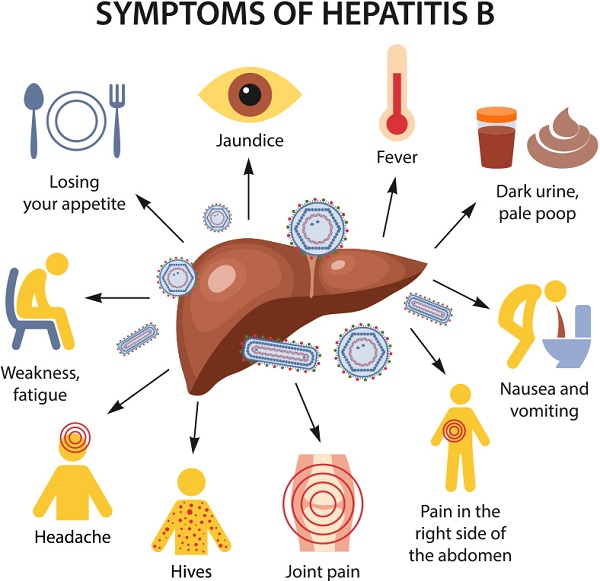
Fig: Hepatitis B virus symptoms (Source: Sexual Health)
Clinical manifestation of Hepatitis B virus
The incubation period of the Hepatitis B virus is around 6 months. The clinical manifestation of HBV infection depends on:
age of infection
immune status of the host
level of HBV
Acute Hepatitis B virus infection
The prodromal or preicteric phase is characterized by the gradual onset of anorexia, malaise, and fatigue
During icteric phase, the liver becomes tender with the development of jaundice. Nausea, vomiting, and pruritus with the passing of dark-colored urine also occurs
The infection lasts for a few weeks and then gradually improves in most patients while few may progress as fulminant hepatitis (less than 1%)
Chronic Hepatitis B virus infection
either may be asymptomatic or may be associated with chronic inflammation of the liver
Complications of Hepatitis B virus
The complications of the Hepatitis B virus are as follows:
Cirrhosis and hepatocellular carcinoma are long-term but rare complications of HBV
Fulminant hepatic failure is another major complication of HBV infection (0.5-1% of HBV patients) coagulopathy, encephalopathy, and cerebral edema may also occur with fulminant hepatic failure
Other important complications include- Glomerulonephritis, polyarteritis nodosa, varieties of skin manifestations, cardiopulmonary joint, and neurologic manifestations.




.jpg)