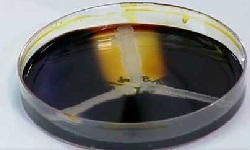
Kliger’s Iron Agar (KIA) - Introduction, Composition, Principle
Introduction to Kliger’s Iron Agar (KIA)
Kliger’s Iron Agar (KIA) is the media used for the detection of the ability of a microorganism to ferment carbohydrates. In negative cases, an organism cannot ferment glucose which is confirmed by an alkaline slant-alkaline-butt (no change) reaction is observed. However, this result alone is insufficient to exclude an isolate from the Enterobacteriaceae family but is used for the presumptive identification of Salmonella Shigella as well as other members of the Enterobacteriaceae family.
Composition of Kliger’s Iron Agar (KIA)
The composition of Kliger’s Iron Agar (KIA) is identical to that of Triple Sugar Iron Agar (TSI). The only difference is that TSI contains 10 gm of sucrose per liter.
The list of ingredients of Kliger’s Iron Agar (KIA) is as follows:
Ingredients | Gram/Liter |
Beef extract | 3 gm |
Yeast extract | 3 gm |
Peptone | 15 gm |
Proteose peptone | 5 gm |
Lactose | 10 gm |
Glucose | 1 gm |
Ferrous sulfate | 0.2 gm |
Sodium chloride | 5 gm |
Sodium thiosulfate | 0.3 gm |
Agar | 12 gm |
Phenol red | 0.024 gm |
Distilled water to equal 1 L | |
Final pH: 7.4 |
The presence of beef extract, yeast extract, peptone, and proteose peptone makes Kliger’s Iron Agar (KIA) rich in nutrition while the lack of any inhibitors permits the growth of most fastidious bacteria. Carbohydrate sources glucose and lactose (10 times that of glucose) are present while unlike Triple Sugar Iron Agar (TSI), sucrose is absent.
Ferrous sulfate functions act as a hydrogen sulfide detector while sodium thiosulfate is the source of the sulfur. The indicator phenol red retains yellow color below a pH of 6.8, a slight increase in acid production results in a change of pH and thus the color of the media.
Principle of Kliger’s Iron Agar (KIA)
.jpg)
Lactose Fermenter
Lactose fermenter
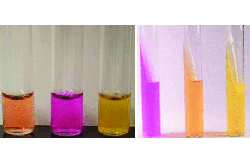
If the test microorganism is a lactose fermenter, the glucose present in the Kliger’s Iron Agar (KIA) is completely used up after the first 8 to 12 hours. The organism then begins to use abundant lactose in the medium. Thus after incubation of 18 to 24 hours, acid production results in both the slant and the butt (deep) of the Kliger’s Iron Agar (KIA) changes from red to yellow i.e. acid-slant–acid (butt) deep reaction.
.jpg)
Non lactose Fermenter
Non-lactose fermenter
If the test microorganism is a non-lactose fermenter, the glucose present in the Kliger’s Iron Agar (KIA) is completely used up after the first 8 to 12 hours. This metabolism only releases a relatively small quantity of acid since the amount of glucose is limited in the medium.
Initially, after 8 to 12 hours of incubation, both the slant and the butt (deep) of Kliger’s Iron Agar (KIA) change from red to yellow. However, as the glucose supply becomes completely exhausted, the oxidative degradation of the amino acids in the presence of oxygen (available on the slant but not in the deep) reverts to an alkaline pH, and the color returns to red.
In the deep, where it is anaerobic, amino acid degradation is insufficient to counter the acid formed previously. Thus, the color remains yellow.
 stain.png)
.jpg)
.jpg)
.jpg)
.jpg)
.jpg)