Rickettsia rickettsii - Classification, Characteristics, Morphology, Culture
Classification of Rickettsia rickettsii
The classification of Rickettsia rickettsii is done as follows:
Domain: Bacteria
Phylum: Pseudomonadota
Class: Alphaproteobacteria
Order: Rickettsiales
Family: Rickettsiaceae
Genus: Rickettsia
Species group: Spotted fever group
Species: rickettsii
Characteristics of Rickettsia rickettsii
Rickettsia rickettsii causes Rocky Mountain spotted fever. They are primary pathogens of arthropods (lice, fleas, ticks, mites) and are present in the intestinal tract- transmitted by arthropod vectors.
The bacterium has an LPS and peptidoglycan layer. The LPS shows weak endotoxic activity.
They multiply by binary fission within the cytoplasm of eukaryotic cells and the target cells are the reticuloendothelial system. The release of mature rickettsiae results in the lysis of host cells.
Morphology of Rickettsia rickettsii
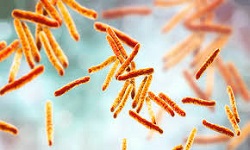
Morphologically, Rickettsia rickettsii is a gram-negative, aerobic, obligate intracellular bacilli that are non-sporing, non-motile, and non-capsulated.
The infection is transmitted by the bite of an infected tick and is the bacterial parasite vascular epithelial cells. They are poorly Gram-stained but stained well with Giemsa and Castaneda staining.
Culture
Rickettsia rickettsii fails to grow in cell-free media but can be grown in the cell line, chick embryo, and animal inoculation. Cell lines such as HeLa, Hep 2, are used to maintain culture for primary isolation. Culture in yolk sack done for vaccine preparation. Animal inoculation is done in guinea pigs and mice.
The optimum temperature for culture is around 32-35°C.
Related Article


Rickettsia prowazekii
Rickettsia prowazekii is the causative agent of epidemic/louse-borne typhus...

Mycoplasma pneumoniae
Mycoplasma pneumoniae causes respiratory tract diseases- primary atypical p...

.jpg)