Bacteroides fragilis - Classification, Morphology, Culture, Virulence factor, Biochemical characteristics
Classification of Bacteroides fragilis
Domain: Bacteria
Phylum: Bacteroidota
Class: Bacteroidia
Order: Bacteroidales
Family: Bacteroidaceae
Genus: Bacteroides
Species: fragilis
Morphology of Bacteroides fragilis
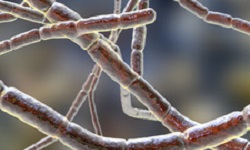
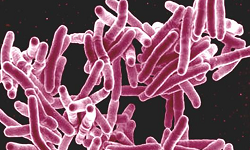
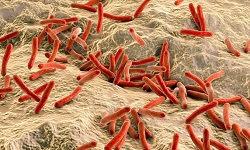
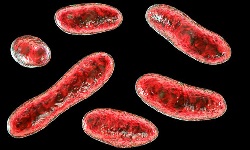
Bacteroides fragilis are obligate, anaerobic, gram-negative rods in morphology. They are non-sporing, non-motile, normal flora of the human GI tract (typically isolated from mucosal surfaces of the oral cavity and GI tract).
In general, an infection caused by Bacteroides fragilis group occurs below the diaphragm.
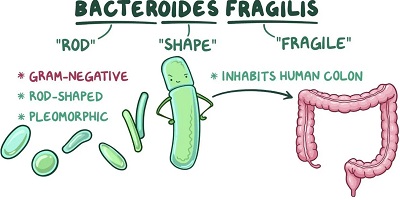
Fig: B. fragilis (Source: Osmosis)
Cultural characteristics of Bacteroides fragilis
Once cultured in the laboratory, Bacteroides fragilis forms non-hemolytic grey colonies of 1-3mm diameter in anaerobic BA.
In Bacteroides Bile Esculin medium (BBE), it gives glistering convex light to grey-colored colonies surrounded by a grey zone.
They can also be cultured in a liquid medium (Thioglycolate broth), and Robertson’s cooked meat medium.
Biochemical characteristics of Bacteroides fragilis
The biochemical characteristics of Bacteroides fragilis are:
ferments sucrose
grows in presence of 20% bile
Indole: Negative
Urease: Negative
Catalase: Positive
Oxidase: variable
Esculin hydrolysis: Positive
Arabinose: Negative
Glucose: Positive
Lactose: Positive
Maltose: Positive
Rhamnose: Negative
Trehalose: Negative
Salicin: Negative
Virulence factors of Bacteroides fragilis
The virulence factors of Bacteroides fragilis include:
Polysaccharide capsule: prevents phagocytosis and complement-mediated cell lysis
Fimbriae: attachment
Endotoxin: LPS (Lipo-Poly saccharide)
β- lactamase: Antibiotic resistance
Succinic acid: inhibit phagocytosis
Enzyme: mediates tissue damage
.jpg)
.jpg)