Corynebacterium diphtheriae - Classification, Morphology, Virulence factor, Culture
Introduction to Corynebacterium diphtheriae
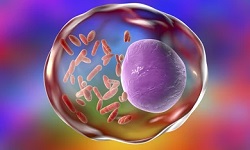
Corynebacterium diphtheriae, the causative agent of diphtheria, is a pathogenic bacteria. Unless they are infected by a bacteriophage that carries a gene responsible for toxin production, the supposed pathogen is harmless. The diphtheria toxin causes the disease.
Classification of Corynebacterium diphtheriae
Corynebacterium diphtheriae can be classified phenotypically as:
Domain: Bacteria
Phylum: Actinomycetota
Class: Actinomycetia
Order: Mycobacteriales
Family: Corynebacteriaceae
Genus: Corynebacterium
Species: diphtheriae
History of Corynebacterium diphtheriae
Corynebacterium diphtheriae was first discovered by German bacteriologists Edwin Klebs and Friedrich Löffler in 1884.
Morphology of Corynebacterium diphtheriae
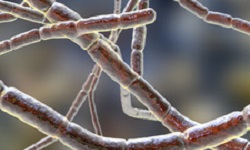
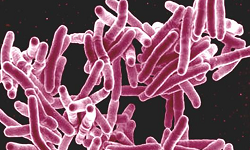
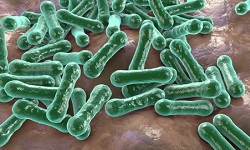
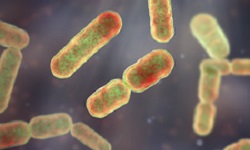
Morphologically, Corynebacterium diphtheriae is Gram-positive bacilli in short chains or clumps (resembles Chinese letters). They are non-sporing, non-motile, and non-capsulated, measuring 3-6 x 0.6 x 0.8 µm. It has swollen ends containing 2-3 metachromatic granules. Granules can be demonstrated by Albert stain, Neisser stain, and ponder stain.
Culture of Corynebacterium diphtheriae
Corynebacterium diphtheriae are aerobic/facultative anaerobe. They are slow growers even in enriched media.
Some enriched media used for the culture of Corynebacterium diphtheriae are- Loeffler serum medium, Dorset egg medium, Tellurite blood agar, and Tirnsdale medium. Loeffler and Dorset medium are not used for primary isolation because of commensals as it may overgrow the Diptheria bacteria.
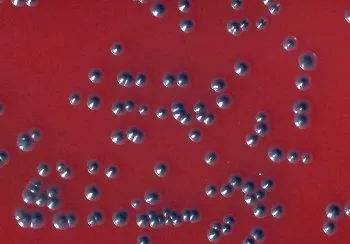
Fig: Corynebacterium diphtheriae biotype gravis in tellurite blood agar (Source: CDC/Dr. W.A. Clark)
Virulence factor of Corynebacterium diphtheriae
Diphtheria toxin is the key virulence factor of Corynebacterium diphtheriae.
it is an exotoxin produced by the bacterium which is produced only by strains of Corynebacterium diphtheriae that are lysogenized with bacteriophages that control the structural gene (tox gene) for the toxin molecule.
The gene for toxin production occurs on the chromosome of the prophage but a bacterial repressor protein control expression of the gene
The repressor is activated by iron. High yield of toxins are synthesized only by lysogenic bacteria under conditions of iron deficiency
It is a protein with a molecular weight 58kDa. It consists of 2 functionally distinct polypeptide chains- fragment A (24 KDa) and fragment B (38KDa).
fragment A and fragment B are linked by a disulfide bond. Neither of these fragments is toxigenic on its own but acts together to cause toxigenicity
.jpg)
.jpg)