Clonorchis sinensis - Complication, Prognosis, Laboratory Diagnosis, Treatment, Prevention, Control
Complications of Clonorchis sinensis
Complications of Clonorchis sinensis include:
Recurrent pyogenic cholangitis
Cholangiocarcinoma
Recurrent pyogenic cholangitis
most frequent complication
caused by a partial obstruction of bile ducts by adult Clonorchis sinensis or due to secondary bacterial infections
an acute condition observed within 1 to 3 hours after a heavy meal – caused due to excessive secretion of pancreatic juice into a partially obstructed bile duct
Cholangiocarcinoma
a cancerous condition
observed in patients with severe and prolonged Clonorchis sinensis infection
Prognosis of Clonorchis sinensis
Although the prognosis is good in light and acute infections, the prognosis of Clonorchis sinensis after complications such as cholangiocarcinoma is bad.
Laboratory diagnosis of Clonorchis sinensis
The laboratory diagnosis of Clonorchis sinensis is based on the detection of flask-shaped eggs in the faeces or in duodenal contents. It is done following procedures:
Samples
Stool
biopsy tissue (liver, pancreas)
aspirates (duodenum)
Microscopy
the concentration of samples can be done by the formalin-ether sedimentation method
stool microscopy is often followed by the evaluation of worm load by enumeration of the eggs in the faecal smear
examination of duodenal contents/fluid has more sensitivity than stool examination
however, Clonorchis sinensis eggs are difficult to distinguish from Heterophyes, Opisthorchis, Metagonimus
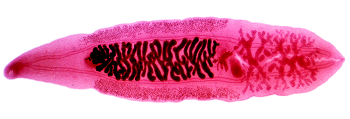
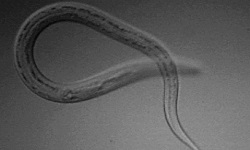
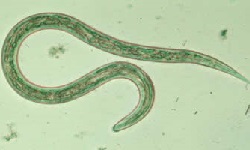
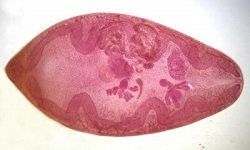
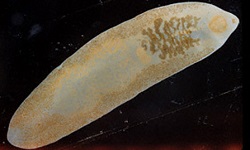
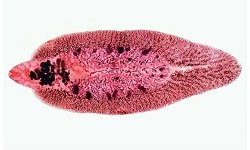
Image: Clonorchis sinensis adult (Source: Wikipedia)
Immunodiagnosis
Detection of antibodies
Since Clonorchis sinensis induces immune response i.e. presence of circulating antibodies, serological methods can be used for laboratory diagnosis.
Serological tests used to detect serum antibodies include:
Complement fixation test
Indirect haemagglutination test
ELISA (double sandwich ELISA)
Skin Test
The intradermal skin test for Clonorchis sinensis infection is a simple and reliable test:
Procedure for immediate hypersensitivity test
soluble extract of the adult Clonorchis sinensis parasite is intradermally injected (0.1ml) in one arm
an equal volume of normal saline is injected intradermally on the other arm as a control
development of a large wheel, pseudopodium, and erythema indicates infection
It is used for epidemiological studies rather than as a diagnostic method.
Treatment of Clonorchis sinensis
Drugs of choice for the treatment of Clonorchis sinensis infection is Praziquantel. Antibiotics are also administered to prevent recurrent pyogenic cholangitis.
In some cases of biliary tract obstruction, surgery is done to mechanically remove the adult flukes.
Prevention, Control of Clonorchis sinensis
The control and prevention of Clonorchis sinensis can be obtained by following steps:
avoid consumption of raw, undercooked, salted, pickled, dried freshwater fish
use of manure instead of human faeces in fish husbandry
immediate treatment of infections in dogs, cats, and people
use of molluscicides to control snails
reduce contamination of water sources by animals, and human faeces i.e. proper sewage disposal