Hepatitis C virus - Classification, Morphology, Genome
Classification of Hepatitis C virus
The classification of Hepatitis C virus includes:
Realm: Riboviria
Kingdom: Orthornavirae
Phylum: Kitrinoviricota
Class: Flasuviricetes
Order: Amarillovirales
Family: Flaviviridae
Genus: Hepacivirus
Species: Hepacivirus C
Hepacivirus C contains 6 major genotypes (1-6) and numerous (>50) subtypes based on nucleotide diversity. Quasispecies within individuals.
Hepatitis C virus is an important cause of parenteral non-A, non-B hepatitis (NANBH) worldwide.
Morphology of Hepatitis C virus
Morphologically, Hepacivirus C is spherical (50nm in diameter), enveloped, icosahedral nucleocapsid core with positive-sense ssRNA virus (9.4 kb). It is the only member of the genus hepacivirus containing RNA as the genome).
The structural proteins include the core and 2 envelope proteins (E1 and E2). These Hepatitis C virus envelope proteins E1 and E2 undergo variation during infection due to hypervariable regions within their genes.
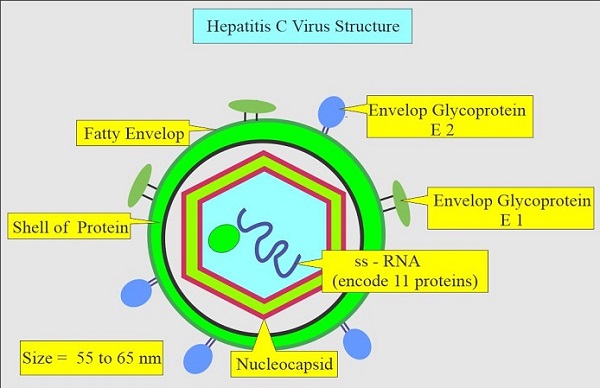
Fig: Hepacivirus C morphology (Source: ResearchGate)
Genome of Hepatitis C virus
Hepacivirus C genome encodes 10 structural and regulatory proteins. The genome contains
highly conserved untranslated regions (UTRs) at both 5’ and 3’ ends
a single ORF encoding a polyprotein of 3,000 amino acids at the mid
The Hepatitis C virus polyprotein is processed cotranslationally and posttranslationally by cellular and viral proteases to produce specific viral gene products. The Hepatitis C virus genome also contains structural proteins, core, E1, and E2 are located in the N-terminal quarter. The non-structural proteins (NS2, NS3, NS4A, NS4B, NS5A, NS5B) are present in the remaining portion, and the polyprotein.
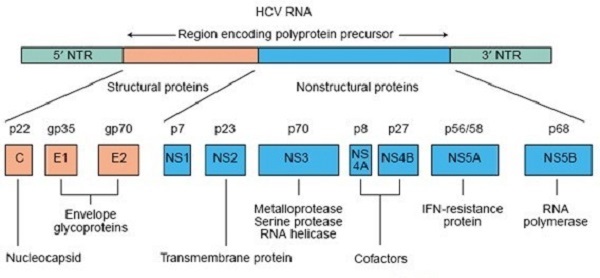
Fig: Hepacivirus C genome (Source: ResearchGate)




.jpg)