Hepatitis C virus - Epidemiology, Replication, Transmission
Epidemiology of Hepatitis C virus
Hepacivirus C is prevalent worldwide and has nearly 170 million infected people worldwide. It has higher prevalence rates have been found in southern Italy, Spain, certain Europe, Japan, and parts of the middle east, with as many as 19% in Egypt.
The Hepatitis C virus is the most common cause of parenteral NANBH (non-A, non-B hepatitis) worldwide.
Replication of Hepatitis C virus
Hepacivirus C replication takes place in the endoplasmic reticulum of hepatocytes. It may also replicate in the blood mononuclear cells.
Hepatitis C virus enters the host cells through interactions between viral Gp and cell surface molecules, with CD81 as a major one. (other are LDL receptors, SR-B1, DC-SIGN, Claudin-1, and Occludin). Once penetrated, the virion is uncoated and the genome is translated to produce a single polyprotein.
The polyprotein is then cleaved by proteases to produce 3 structural and 7 NS proteins. The Hepatitis C virus genome replication takes place via the viral RNA-dependent RNA polymerase and the newly formed genome is then assembled to form new virus particles. It gains envelope while budding through ER. These virions are then released by the process of exocytosis.
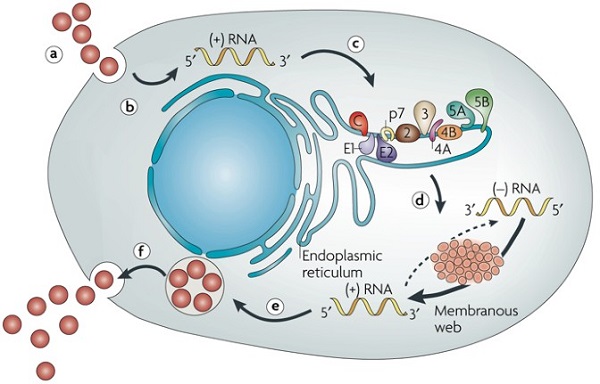
Fig: Hepacivirus C replication (Source: ResearchGate)
Transmission of Hepatitis C virus
Hepacivirus C, commonly known as Hepatitis C virus, is commonly transmitted through:
transfusion of infected blood and blood products
transplantation of organs from the infected individual
sharing of contaminated needles among intravenous users
needle stick injury in health care settings
birth to an HCV-infected mother




.jpg)