Pneumocystis jirovecii - Life Cycle, Pathogenesis, Pathology, Host Immunity, Clinical Manifestation
Life Cycle of Pneumocystis jirovecii
The complete life cycle of Pneumocystis jirovecii is not yet fully understood. The current knowledge about the fungi's life cycle is based on the morphological studies of lung sections obtained from rats and from culture media.
In humans, the life cycle occurs extra-cellularly in the lung alveoli while the intra-cellular stages in humans have not been described.
Sexual stage
sexual cycle of Pneumocystis jirovecii starts after inhalation of cysts by a susceptible human host
after reaching lung alveoli, the cysts rupture to release sporozoites which develop into trophozoites
theoretically, some of these sporozoites are believed to be haploid structures and these structures are believed to be capable of copulation
after two haploid trophozoites sexually mate with each other, they produce cysts
the sexual cycle of Pneumocystis jirovecii is now complete
Asexual stage
in the asexual stage of the fungi, Culture of Pneumocystis jirovecii trophozoites undergo binary fission to produce cysts with 6-8 sporozoites
this stage is responsible for the majority of Pneumocystis jirovecii multiplication in the host lungs
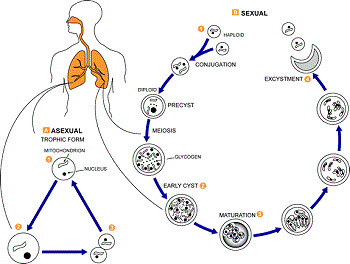
Figure: Pneumocystis jirovecii life-cycle (Source: CDC)
Pathogenesis, Pathology of Pneumocystis jirovecii
In an immunocompetent host, the mode of transmission of Pneumocystis jirovecii infection remains exactly unknown but is believed to be from the inhalation of cysts. In an immunocompromised host, Pneumocystis jirovecii pneumonia is believed to have been caused by the reactivation of latent infection.
After the fungi reach the lung alveoli, the cysts rupture to release intracystic bodies i.e. sporozoites which develop into trophozoites.
Pneumocystis jirovecii trophozoites initiate infection by adhering to type I and possibly type II pneumocytes in the alveolar epithelium but the mechanism of this adherence is not clearly understood. It has been demonstrated that alveoli cells and the surface of the organism are closely apposed to each other- without changes in the intra-membranous particles or any fusion of the cell membrane.
Since the immune system is compromised in individuals under immune-suppressive drugs or AIDS, Pneumocystis jirovecii are able to multiply in large numbers and subsequently cause necrosis of type I pneumocytes, and damage to the basement of alveolar membranes, pulmonary edema, impairment of gas exchange in the lung.
The nutritional status of the host also is an important factor in the course of infection. In people with low protein intake or loss of protein due to ceratin diarrhoeic conditions may adversely affect the immune system and result in the unrestricted proliferation of the Pneumocystis jirovecii infection.
Host Immunity of Pneumocystis jirovecii
Pneumocystis jirovecii infection induces host immunity - both cell-mediated immunity and humoral immunity in the host.
Cell-mediated immunity (CMI)
Cell-mediated immunity (CMI) is more important humoral immunity
occurs mostly in individuals with impaired cell-mediated immunity
people with fewer CD4+ T cells are reported to have infections develop into progressive pneumonia
AIDS patients with a CD4+ count of fewer than 200 cells/mm3 are highly associated with the onset of Pneumocystis jirovecii pneumonia
Humoral Immunity
Humoral Immunity is mediated by antibodies, mostly IgG which is specific to Pneumocystis jirovecii
these antibodies are believed to serve as an opsonin and help in complemented mediated lysis of the fungi
possibly also inhibit the attachment of fungi onto the host cell
Clinical Manifestation of Pneumocystis jirovecii
In healthy individuals, Pneumocystis jirovecii rarely symptomatic disease while in immunosuppressed hosts, it may result in clinical manifestations such as:
Pneumocystis jirovecii pneumonia (PCP)
Epidemic or infantile pneumocystosis
Pneumocystis jirovecii pneumonia (PCP)
Pneumocystis jirovecii is the most important cause of pneumonia in immunosuppressed hosts
PCP is the leading cause of death in children and adults with suppressed immune systems (AIDS, receiving immune-suppressive therapy, organ transplantation, malignancy treatment)
symptoms include fever, dyspnoea, respiratory distress, non-productive cough
the course of PCP is rapid with a mortality rate of around 90-100%
Epidemic or infantile pneumocystosis
Epidemic or infantile pneumocystosis condition occurs in pre-mature, debilitated, and malnourished infants
the incubation period may range from 1 month to 2 months and the disease is insidious
the infection may start as mild tachypnoea
after 1 to 4 weeks, tachypnoea may progress to well-marked respiratory syndromes such as cyanosis, flaring of the nasal alae, retraction of the sternum
these syndromes may last for 4 weeks to 6 weeks
the mortality rate is around 25 % to 50%