Bacitracin sensitivity test, Taxos A
.jpg)
Bacitracin sensitivity test, Taxos A
Bacitracin sensitivity test has also been widely used to differentiate Streptococcus pyogenes from other β-hemolytic streptococci, Staphylococcus spp from Micrococcus spp. and Haemophilus influenza from respiratory flora.
Coagulase test

Coagulase test
The coagulase test is used to differentiate Staphylococcus aureus from coagulase-negative Staphylococcus spp (CoNs).
Quelling reaction
.jpg)
Quelling reaction
Quelling reaction, also known as Neufeld reaction, is a biochemical reaction used to visualize/detect bacterial capsules, which if positive, appear enlarged. Streptococcus pneumoniae, Klebsiella pneumoniae, Neisseria meningitidis, Bacillus anthracis, Haemophilus influenzae, Escherichia coli, and Salmonella.
Bile solubility test
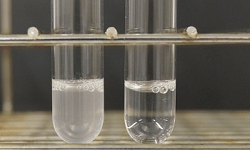
Bile solubility test
The purpose of bile solubility test is to differentiate Streptococcus pneumoniae from other α-hemolytic Streptococcus spp. S. pneumoniae is bile soluble while other species of α-hemolytic Streptococcus spp are not lysed by bile.
Optochin sensitivity test, Taxos P
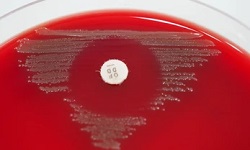
Optochin sensitivity test, Taxos P
Optochin sensitivity test is an important parameter used to identify Streptococcus pneumoniae from other α-hemolytic streptococci species in a laboratory setting.
Urine Test

Urine Test
The collection of urine is done to diagnose infection in the urinary system. Clinical syndromes such as UTIs, urethritis, ureteritis, asymptomatic bacteriuria, cystitis, urethral syndrome, pyelonephritis, etc.
Sputum sample

Sputum sample
Sputum samples can be collected for diagnosis through various processes- Expectorated sputum, Induced, Gastric aspirates, Endotracheal, or Trancheostomy suction specimen, Bronchoscopy, Transtracheal aspirates
Bronchitis

Bronchitis
Bronchitis is an infection of the main airways of the lungs (bronchi) resulting in inflation and irritation of the bronchus. It can be divided into two types based on the durability of the infection.
Pneumonia
Pneumonia
Pneumonia is the inflammation of the lower tract involving the lung's airways and supporting structures. Once the pathogens have successfully invaded the lung, it affects the alveolar spaces and their supporting structure, the interstitial and the terminal bronchioles causing disease.
Vaccines