Leptospira interrogans complex - Lab Diagnosis, Antibiotic Treatment
Lab Diagnosis of Leptospira interrogans complex
The laboratory diagnosis of Leptospira interrogans complex includes:
Specimen
Blood
urine
CSF
peritoneal dialysate
Microscopy
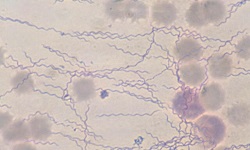
Darkfield microscopy detects motile Leptospira interrogans complex in wet mount preparation of blood samples. (useful for early stages of the disease but not late stages)
However, it is insensitive and shows false-positive results. Also, gram stain or silver impregnation staining methods are not useful.
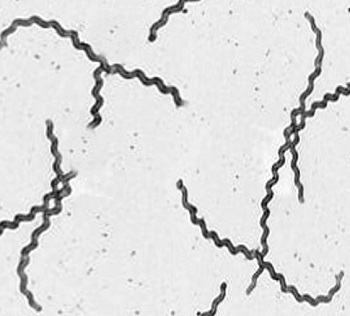
Fig: Leptospira interrogans seen in darkfield microscopy (Source: NCBI)
Ag detection
Direct fluorescent Ab assay for Leptospira interrogans complex detects leptospira Ag directly in blood or CSF.
Culture
Blood for blood cultures must be collected 4 days after the onset of symptoms while CSF culture should be collected within the first 10 days. Urine cultures remain positive for several weeks after the initial infection. Urine should be inoculated asap. 1-2 drops of undiluted urine and 1:10 dilutions of urine are added to 5ml of the medium.
The specimen is cultured in Fetcher’s, Stuart’s, or EMJH (Ellinghasuen McCullough Johson Harris media supplemented with neomycin and 5-fluorouracil (anti-cancer drug). 5-fluorouracil prevents contamination by other bacteria.
The cultures for Leptospira interrogans complex diagnosis are incubated at room temperature or 30°C in the dark for up to 6-8 weeks.
Microorganisms grow below the surface of broth cultures. Materials should be collected a few cm below the surface and examined weekly by direct wet preparation under dark-field illumination. Based on the number of coils, hooked ends, and cork-screw motility Leptospira can be distinguished.
Saprophytic spp can grow to 10°C and lower at least 5°C lower than the growth temperature of pathogenic Leptospira. Identification can also be done by agglutination with type-specific sera.
Laboratory animal inoculation
Blood is inoculated intraperitoneally into laboratory animals young guinea pigs. If the blood contains Leptospira interrogans, the guinea pigs develop fever, and jaundice and die within 8-12 days with hemorrhage into veins and serous cavities.
Serodiagnosis
MAT (Microscopic agglutination test)
MAT (Microscopic agglutination test) is a type of serodiagnosis method that depends on the ability of the patient’s serum to agglutinate live leptospires obtained by culture. The test is performed by mixing the leptospira Ag with serial dilutions of the patient’s sera. Positive results are indicated by the presence of agglutination using dark-field microscopy.
MAT has a sensitivity of 92% and a specificity of 95%. It shows false negatives with serum specimens collected in the immune phase of the disease and in patients treated with antibodies. MAT shows false-positive reactions with serum from cases of Lyme disease, Legionella, and syphilis.
Other serological tests include
Microscopic slide agglutination test
Indirect haemagglutination assay (IHA)
IgM dipstick test
Latex agglutination test
IgG ELISA
IgM ELISA (IgM Ab becomes detectable during the first week of illness)
Molecular diagnosis
PCR
real-time PCR
DNA hybridization
Antibiotic therapy, Treatment of Leptospira interrogans complex
Leptospira interrogans complex can be treated with antibiotic therapy such as:
Ceftriaxone
Amoxicillin
Tetracycline
Penicillin
Doxycycline
* vaccines are available
.jpg)