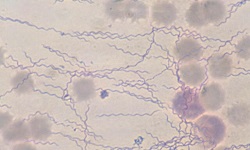
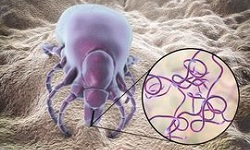
Leptospira interrogans complex - Virulence factors, Pathogenesis, Host immunity
Virulence factors of Leptospira interrogans complex
Leptospira interrogans directly invade and multiply in the blood and tissue. The main virulence factors determinant of Leptospira includes:
Adhesin (Len A)
Endotoxin, hemolysin, and lipase
Endotoxin, hemolysin, and lipase
sphingomyelinase C and H
Fibronectin- binding protein for adhesion and invasion
LPS in OMP
Pathogenesis of Leptospira interrogans complex
The pathogenesis and severity of leptospirosis, caused by Leptospira interrogans complex, depends on several factors such as:
host immunity
virulence of infecting strain
the number of infecting leptospires
Humans become infected through direct or indirect contact with the urine or blood of infected animals (rats, mice, dogs, pigs, and cattle). Leptospires enter the human host through breaks in the skin, mucous membrane, or conjunctivae.
Leptospira interrogans after entering rapidly invade the bloodstream and spread throughout all sites in the body as the CNS, kidney, liver, and skeletal muscles. It also has chemotaxis toward hemoglobin.
In the kidney, it causes interstitial necrosis, tubular necrosis, tubular damage, and hypovolemia resulting in renal failure. In the liver, it causes centrilobular necrosis and hepatocellular dysfunction leading to jaundice. In skeletal muscle, it causes edema and focal necrosis.
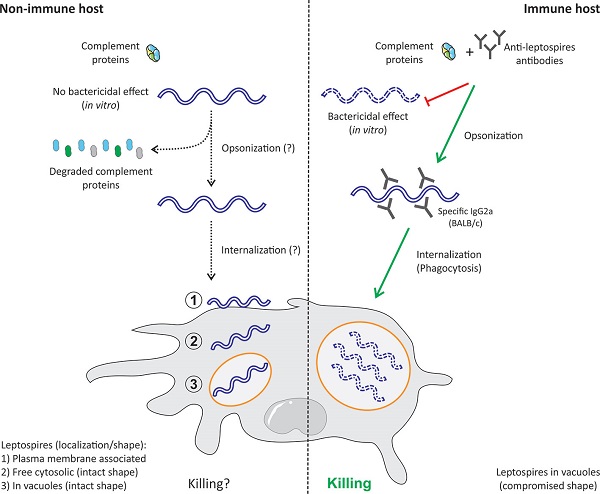
Fig: Leptospira interrogans pathogenesis (Source: frontiersin)
Host immunity of Leptospira interrogans complex
Humoral immunity against Leptospira interrogans complex plays an important role in the clearance of leptospires from circulation.





.jpg)