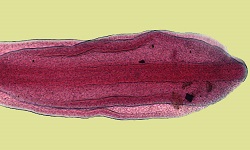
Schistosoma haematobium - Clinical Manifestation, Complication, Prognosis, Epidemiology, Reservoir, Transmission
Clinical manifestations of Schistosoma haematobium
Visceral or urinary Schistosomiasis, caused by Schistosoma haematobium, is an infection of the urinary tract including the urinary bladder, and ureter, and can sometimes also infect the intestine.
Urinary Schistosomiasis
It is of two types – acute urinary schistosomiasis and chronic urinary schistosomiasis.
Acute urinary schistosomiasis
the incubation period is variable i.e. several weeks
symptoms similar to that of cercarial dermatitis and serum-like sickness
dermatitis is due to penetration of the skin by Schistosoma haematobium cercariae
within 24 hours of infection, pruritic papular lesion accompanied by skin lesions occurs
serum-like sickness symptoms include fever, malaise, right upper quadrant pain
Chronic urinary schistosomiasis
occurs months to years after a Schistosoma haematobium infection
associated with the proliferation of parasites and inflammation of host tissues
caused by the deposition of eggs in various organs
clinical syndromes include terminal haematuria, frequent urination, dysuria, leucocyturia, proteinuria
degree of dysuria, leucocyturia, and proteinuria depends on the severity of schistosomiasis
Complications of Schistosoma haematobium
complications such as hydroureter, hydronephrosis, uremia, and secondary microbial infections (especially Salmonella) can lead to renal failure
ectopic pathological lesions in the spinal cord result in a transverse myelitis-like syndrome
in chronic cases of schistosomiasis, mostly after 10-20 years of infection, urinary bladder carcinoma – usually squamous cell than a transitional cell – occurs
Prognosis of Schistosoma haematobium
In acute infections, schistosomiasis is benign and improves upon treatment.
In chronic cases, morbidity and mortality are due to complications.
Epidemiology of Schistosoma haematobium
Schistosoma haematobium is one of the major causes of morbidity and mortality in the world and stands next to malaria. Urinary schistosomiasis is endemic to 54 countries in Africa and the Middle-east.
Reservoir, Source of Schistosoma haematobium
Man is the reservoir for Schistosoma haematobium. Urine from an infected human is the primary source of infection in fresh-water snails which is present in large numbers in irrigation canals.
The blood fluke infection is more frequent in children and young adults of age 5 -25 years, fishermen, women who wash clothes, and utensils along the river and canal, and agriculture laborers.
Transmission of Schistosoma haematobium
Man becomes infected with Schistosoma haematobium after coming in contact with water contaminated with cercaria – the infective stage – which penetrates the skin.
Snails acquire the infection after getting exposed to water/urine containing miracidium.