Trichomonas vaginalis - Life Cycle, Pathogenesis, Pathology, Virulence factors, Host immunity, Transmission, Treatment
Life Cycle of Trichomonas vaginalis
the life cycle of Trichomonas vaginalis is simple- completed in a single host
trophozoites are the infective stage
transmission occurs from infected humans, especially women who act as reservoirs, to man
in females, the trophozoites feed on the nutrients from the mucosal surface of the vagina, erythrocytes, and bacteria
the longitudinal binary fission begins with the division of the nucleus, followed by the division of the neuromotor apparatus and separation of the cytoplasm forming two daughter trophozoites
on unprotected sexual contact, the Trichomonas vaginalis trophozoites are transmitted to the male where they inhabit and replicate in the urethra, prostate, and seminal vesicles.
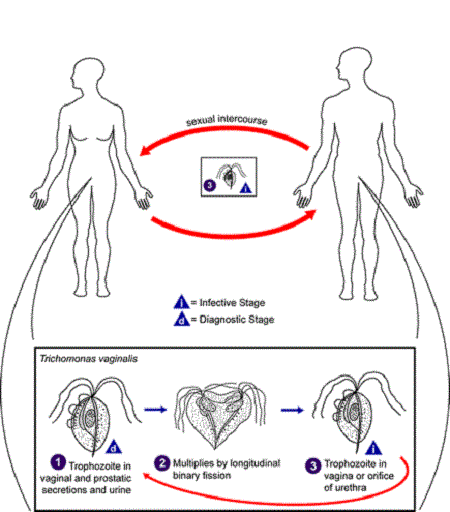
Fig: T. vaginalis life cycle (Source: CDC)
Pathogenesis, Pathology of Trichomonas vaginalis
since they are non-invasive, obligate parasites, Trichomonas vaginalis cannot survive outside of the human body and needs to localize in the vaginal, urethral, prostate, or seminal vesicles for survival.
Trichomonas vaginalis adheres to the mucosal epithelium, causes superficial lesions, and infects squamous epithelium but is not able to infect the columnar epithelium
they cause degradation and desquamation of the vaginal epithelium
cellular atypia and intra-cellular edema called chicken-like epithelium is the characteristic feature of trichomonosis
the parasite also destroys the epithelial cells by direct cell contact and the production of a cytotoxic substance
they protect themselves from the lytic action of the alternative complement pathway and host proteinases by combining with the host plasma protein
The vaginal pH of females lowers from 4.7 to 4.5 after reaching puberty. The lactobacilli present in the vaginal maintain the lower pH of the vagina. The polymorphonuclear (PMN) leukocytes protect the host from the chemotactic substance produced by Trichomonas vaginalis.
Virulence factors of Trichomonas vaginalis
The virulence factors of Trichomonas vaginalis include
protein liquids and proteases help in adherence of the parasite to the epithelial lining of the genito-urinary tract
produces lactic acid and acetic acid – both are responsible for lowering the pH of the vaginal and the low pH of vaginal secretion is cytotoxic to epithelial cells
the enzyme cysteine protease is hemolytic in nature
Host immunity of Trichomonas vaginalis
Although the host immunity in children is not clearly known, Trichomonas vaginalis specific IgG and IgA antibodies are found in the vaginal secretions of infected females.
IgA antibodies are suspected to increase opsonization of the parasite by IgG antibodies which ends in phagocytosis of the trichomonas.
Epidemiology of Trichomonas vaginalis
Epidemiologically, Trichomonas vaginalis is:
the most common non-viral STI
prevalent worldwide
Reservoir, Source of Trichomonas vaginalis
Infected women are the reservoir of Trichomonas vaginalis infections and an infected man is a carrier. The main source of infection is vaginal discharge
Transmission of Trichomonas vaginalis
The transmission of Trichomonas vaginalis occurs via:
unprotected sexual contact- venereal route
use of common fomites such as towels, toilet seats, and also through water and mud baths
female newborns are at risk of infection during a vaginal birth if the mother is infected
Treatment of Trichomonas vaginalis
metronidazole is the drug of choice for the treatment of Trichomonas vaginalis
the drug should be given to all sexual partners of infected individuals
Prevention, Control of Trichomonas vaginalis
The prevention and control of Trichomonas vaginalis include:
use of physical protections such as condoms during sex
avoid sexual contact with infected people