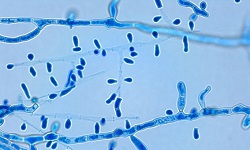
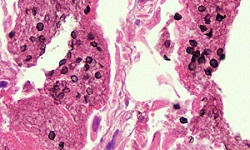
Trichophyton rubrum - Pathogenesis, Host Immunity, Risk factors, Epidemiology, Reservoir, Transmission, Treatment, Prevention, Control
Pathogenesis of Trichophyton rubrum
Dermatophytes such as Trichophyton rubrum, grow within dead, keratinized tissue of its human host. While other species of Trichophyton are able to produce keratinolytic protease enzyme in vivo which aids the fungi to penetrate into living cells, Trichophyton rubrum does not perforate hair.
In humans, males are more often infected than females. The Trichophyton rubrum infection is typically restricted to upper layers of the epidermis but in some cases, deeper infections may occur.
Extensive granuloma due to Trichophyton rubrum occurs in immunocompromised patients while immunodeficient neonates may develop systemic Trichophyton rubrum infections.
Host Immunity against Trichophyton rubrum
Trichophyton rubrum infection does not elicit strong inflammatory responses. The fungi are able to suppress cellular immune responses including lymphocytes (particularly T cells).
A pathologically important fungal cell wall component is mannan, which also suppresses host immune responses. However, the exact mechanism remains undiscovered.
The fungi have been associated with the induction of an id reaction in which acute dermatitis develops for days or weeks at skin locations that are distant from the infectious site or initial inflammatory area.
Risk factors of Trichophyton rubrum
Risk factors of Trichophyton rubrum include diabetes, humid environment, high blood pressure, weak immune system, excessive sweating, cracks in feet, and recurrent hand trauma.
The profession and gender of an individual also determine fungal infection. Farmworkers, machine operators, mechanics, people who work with chemicals, electricity workers, gas workers, and pet owners have a higher incidence of infection while on the basis of gender, more males are infected than females.
Epidemiology of Trichophyton rubrum
Trichophyton rubrum is either zoophilic or anthropophilic, based on their natural habitat. For anthropophilic species, man is the only host.
Reservoir, Source of Trichophyton rubrum
Humans and animals are natural reservoirs for Trichophyton rubrum, which can be Anthropophilic or Zoophilic. An infected individual is the source of Anthropophilic Trichophyton rubrum.
Transmission of Trichophyton rubrum
Trichophyton rubrum can be transmitted via contact with infected skin or hairs. Fomites such as combs, towels, brushes, barber shop clippers, or scissors are responsible for the transmission of Trichophyton rubrum from one person to another.
Use of unhygienic common showers, dressing rooms, and swimming pools where desquamated skin is a source of Trichophyton rubrum infection is responsible for the transmission of athlete’s foot.
Treatment of Trichophyton rubrum
Miconazole, Clotrimazole, and Tolnaffate - creams are used for the treatment of mild Trichophyton rubrum infection.
Griseofulvin – oral administration in severe infections for a severe skin infection (4 to 6 weeks) and severe nail infection (1 year).
Prevention of Trichophyton rubrum
Trichophyton rubrum can be prevented/controlled by following steps:
avoid moisture build-up in vulnerable areas such as the groin
avoid tight clothing
lose weight if the infected individual is obese
not sharing towels or other fomites
proper cleaning/sanitizing of public showers, bathrooms, dressing rooms, and swimming pools
proper and complete treatment of infected individuals including animals