Ancylostoma duodenale - Host Immunity, Clinical Manifestation, Complication, Transmission
Host Immunity of Ancylostoma duodenale
Several studies have shown that repeated hookworm infections develop host immunity which eliminates the Ancylostoma duodenale parasite from the host. Repeated infections by hookworm larvae may induce a strong immune response when the circulatory system and respiratory tract are involved during larval migration. As a result, larvae may be encapsulated in various host tissues.
In some cases of hookworm infection, immediate hypersensitivity reactions in the intestine are linked to spontaneous reduction of work and self-cure. This occurs as the parasites release allergic products, high levels of host IgE antibodies and mast cells.
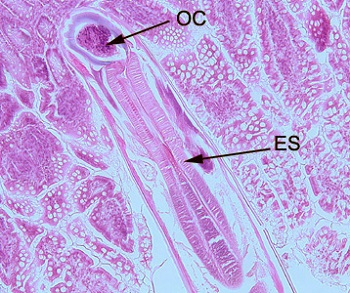
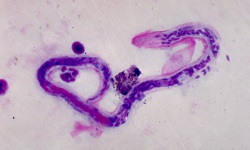
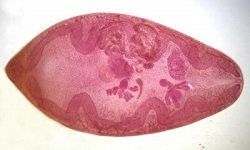
Adult Ancylostoma duodenale in host tissue, stained with hematoxylin and eosin (H&E) (Source: ResearchGate)
Clinical Manifestations of Ancylostoma duodenale
Parasitic infections caused by Ancylostoma duodenale are symptomatic in 20% to 40% of cases. Depending on the site and phases of infection, the clinical manifestation of Ancylostoma duodenale includes:
Skin manifestation
Respiratory manifestation
Intestinal Manifestations (anaemia)
Skin manifestation
lesions include small itchy papules
* such papules are observed 7 days to 10 days at the site of skin penetration by the filariform larva
ground-itch is the earliest and an important symptom which is seen in a previously sensitized individual
seen in and around feet- mostly between the toes
symptoms include itching, oedema, erythema, rash
complications are caused by secondary bacterial infections
Respiratory manifestation
caused by the migration of hookworm to the lungs
symptoms include low-grade fever, cough, pharyngeal dyspnoea, haemoptysis
dyspnoea occurs when hookworms first break into lung alveoli from the venous circulation
in severe cases, bronchitis, and pneumonia with pulmonary consolidation may occur
Intestinal manifestations
In the early stages, intestinal manifestations of Ancylostoma duodenale include low-grade fever, vomiting, nausea, abdominal discomfort, anaemia, diarrhoea, etc.
The disease may manifest as iron-deficiency anaemia or hypo-albuminaemia.
Anaemia
The occurrence of anaemia during Ancylostoma duodenale infection is dependent on the worm load present in the intestine as well as the nutritional status of the host. In cases of high hookworm load in addition to poor iron intake or iron deficiency, hypochromic microcytic anaemia occurs.
Anaemia is of three types:
Mild anaemia
Moderate anaemia
Severe anaemia
Mild anaemia
may not produce clear clinical symptoms
Moderate anaemia
includes gastrointestinal symptoms such as loss of appetite, diarrhoea, indigestion, constipation
other symptoms include numbness, headache, tingling sensation, fatigue
Severe anaemia
results in spleen enlargement, liver enlargement, palpitation, dyspnoea, a low systolic pressure bot normal diastolic pressure
in children, a prolonged infection may result in mental and physical retardation
in most cases eosinophilia is common
Complications of Ancylostoma duodenale
Ancylostoma duodenale infection in cases with low protein intake may result in oedema and hypoalbuminaemia.
Prognosis of Ancylostoma duodenale
Infection by Ancylostoma duodenale is rarely fatal and is easily treated. So, the prognosis is excellent.