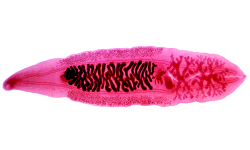
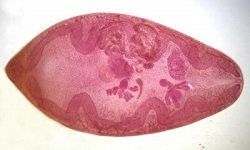
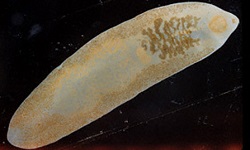
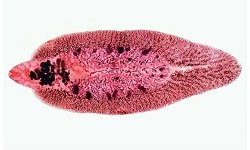
Schistosoma mansoni - Clinical Manifestation, Complication, Prognosis
Clinical Manifestations of Schistosoma mansoni
Schistosoma mansoni can cause acute schistosomiasis or chronic schistosomiasis in the intestines and sometimes in the liver, and lungs.
Acute schistosomiasis
Cercarial dermatitis
also called swimmer’s itch
cercarial dermatitis is rarely a primary infection and mainly occurs in previously exposed individuals
infection may be acquired from both freshwater and saltwater
within 24 hours of infection, pruritic rash occurs
Katayama fever
commonly in infections caused by Schistosoma mansoni and Schistosoma japnicum infections
the incubation period for Katayama fever is 4 weeks to 6 weeks
serum-like sickness occurring at the time when the first egg batch is released in the intestine
common symptoms include fever, myalgia, and right upper quadrant pain while rare symptoms are cough, rash, anorexia, headache
although the symptoms resolve after several weeks, the condition may become fatal if left untreated
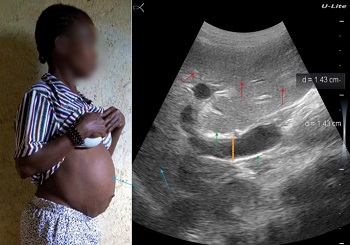
Image: USG showing Schistosoma mansoni infection in a patient from the Democratic Republic of the Congo (Source: Idpjournal)
Chronic schistosomiasis
Schistosoma mansoni infections are mostly asymptomatic or mildly symptomatic while clinical syndromes are present in heavy infections. The onset of chronic schistosomiasis is insidious.
Intestinal schisosomiasis
intestinal schistosomiasis is caused by the formation of granuloma along the intestinal wall and retention of Schistosoma mansoni eggs
clinical symptoms include schistosomiasis dysentery (mucosal diarrhea), abdominal pain, bloody stool along with the passage of parasite eggs
in cases of heavy infections, recurrent Salmonella infection with negative stool culture but with positive blood cultures is seen
Hepato-splenic schisosomiasis
hepato-splenic schistosomiasis occurs when the Schistosoma mansoni infection spreads to the liver
associated with portal hypertension, ascites, periportal fibrosis, and splenomegaly
during the early stages, common symptoms include pain in the left hypochondrium, dyspepsia, flatulence
in later stages symptoms includes melena, haematemesis, edema of the lower, abdominal distension
if toxic hepatitis and other infections in the liver occurs, liver failure may occur
Complications of Schistosoma mansoni
Symmers clay pipe stem or periportal fibrosis is the most common complication of intestinal schistosomiasis caused by Schistosoma mansoni which leads to gastrointestinal hemorrhage and portal hypertension
hepato-schistosomiasis may develop into schistosomal cor pulmonale which occurs in 5% of cases and is associated with dyspnoea, hemoptysis, palpitation
if the spinal cord is involved, the central nervous complication is transverse myelitis
in some cases, the spleen may also be involved which leads to complications such as follicular lymphoma
Prognosis of Schistosoma mansoni
In patients who are in the early stage of Schistosoma mansoni infection or without severe end-organ involvement, treatment is successful.
In cases of severe intestinal schistosomiasis and hepato-splenic schistosomiasis, treatment can be done over months or years.
However, if complications include schistosomal cor pulmonale and transverse myelitis, the prognosis is poor even after treatment.