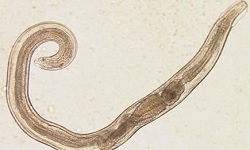
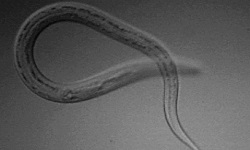
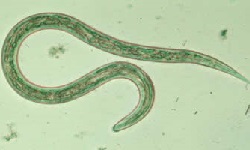
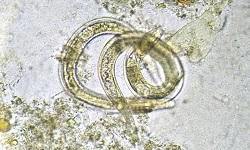
Trichinella spiralis - Host Immunity, Clinical Manifestation, Complication, Epidemiology, Reservoir, Transmission
Host Immunity of Trichinella spiralis
The host immune response of Trichinella spiralis is characterized by massive hypergammaglobulinaemia, high levels of immunoglobulin IgE, marked eosinophilia, and circulating immune complexes.
The presence of host immunity against the parasite plays an important role in reducing the severity of infection.
The cell-mediated immunity (CMI) has a significant role in the development of acquired resistance while gut immunity is dependent on T-cells.
The parasitic infection also induces humoral immunity and is characterized by an increased level of serum IgM, IgG, and IgA but are not protective. They do inhibit larviposition in the gut by the female Trichinella spiralis.
Clinical Manifestations of Trichinella spiralis
The severity of clinical manifestations of Trichinella spiralis is dependent on the immune status of the host and the number of larvae ingested.
The majority of infections are asymptomatic. In symptomatic cases, the incubation period of trichinellosis is 8 to 15 days. In cases of heavy infections, three clinical phases of the disease can occur- depending on the site of the lesion.
Intestinal phase
initial clinical syndromes of Trichinella spiralis are intestinal
occurs due to invasion of the intestinal wall by newborn larvae
clinical manifestations include nausea, vomiting, abdominal pain, and diarrhea
the symptoms last between 2 months to 3 months and appear 1 to 2 days after ingestion
Muscle invasion phase
occurs due to the invasion of muscles by Trichinella spiralis larvae
muscle invasion phase is seen 7 to 11 days after consumption of infected food
in 75% of cases, larval migration to muscle tissues such as the masseter, diaphragm, and intercostal muscles causes myalgia, periorbital and facial edema
other syndromes include fever, conjunctivitis, rashes, fatigue, arthralgia, splinter hemorrhages
Convalescence phase
during the third week of infection, the convalescence phase is marked by the beginning of the encapsulation of the encysted larvae
systemic manifestations include malaise, a weakness that may persist for a few months
other clinical syndromes include myocarditis, vascular thrombosis, bronchopneumonia, and encephalitis
Complications of Trichinella spiralis
The complications of Trichinella spiralis include nephritis, glomerulonephritis, and pneumonitis which may be life-threatening. Other cardio-neurological syndromes are acute myocardial injury, meningitis, diffuse encephalopathy, and focal neurological deficits.
Prognosis of Trichinella spiralis
Trichinellosis, caused by Trichinella spiralis, is usually self-limiting. The primary morbidity is due to persistent myalgia and fatigue that does not develop into neuro-cardiac conditions.
In serious cases of infection, the patient may die from encephalitis, broncho-pneumonia, and myocarditis.
Epidemiology of Trichinella spiralis
Trichinellosis, caused by Trichinella spiralis, common in temperate regions than in tropical regions.
Epidemiologically, it occurs in South America (Argentina, Chile), North America, the United States, Thailand, Kenya, Lebanon, Indonesia, Egypt, Italy, and Cuba.
Reservoir, Source of Trichinella spiralis
Raw or undercooked pork and by-products of pork harboring viable cysts or larvae are the source of Trichinella spiralis infection. Although Pig is the main reservoir, bears and wild boar are also important reservoirs.