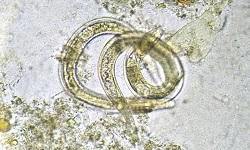
Wuchereria bancrofti - Host Immunity, Complications, Prognosis, Epidemiology, Reservoir, Transmission
Host Immunity of Wuchereria bancrofti
The host immunity of Wuchereria bancrofti involves the suppression of both humoral immunity and cell-mediated immunity. This immunosuppression is seen in all microfilaraemia patients and is specific to filarial antigens.
Cell-mediated immunity
occurs in chronic filariasis
are filarial antigen-specific suppression of cell-mediated immunity
caused by lymphocyte suppressors, suppressive adherent cells, and incompletely defined serum suppressor factors
Humoral immunity
host humoral immunity suppression occurs in all forms of lymphatic filariasis (except microfilaraemia)
characterized by hypoalbuminemia, an elevated level of specific antibody responses
microfilariae and adult Wuchereria bancrofti-specific antibodies do not provide immunity against the parasite
also do not prevent reinfection
in chronic filariasis, total and specific levels of IgE antibodies are found to be elevated
although basophils and mast cell levels are slightly elevated, allergic reactions on exposure to filarial antigens do not occur
in patients with microfilaraemia caused by Wuchereria bancrofti, the antibody response is completely absent
On the basis of immunological determinants, clinical filariasis can be of numerous types:
Asymptomatic microfilaraemia
absence of cell-mediated immunity
presence of limited specific serum antibodies to both adult Wuchereria bancrofti parasites and microfilariae
hyperresponsive to specific filarial antigens
Lymphatic filariasis
both host cell-mediated immunity and humoral immunity response are higher than in cases of asymptomatic microfilaraemia
increased host response in lymphatic filariasis is responsible for the removal of microfilariae from blood and induction of local inflammatory reactions which in turn produce lymphatic damage and obstructive lesions
Endemic normal
In endemic normal patients infected with Wuchereria bancrofti, both humoral and cell-mediated immunity is high.
Complications of Wuchereria bancrofti
Wuchereria bancrofti infection is complicated by secondary bacterial and fungal infections on the overlying skin of elephantiasis (leg or arm).
Prognosis of Wuchereria bancrofti
If the filarial nematode parasitic infection is diagnosed and treated early, the prognosis is good.
Epidemiology of Wuchereria bancrofti
Epidemiologically, Wuchereria bancrofti is mostly found in the tropics and sub-tropics of Asia, Africa, and South America.
Nocturnal periodic Wuchereria bancrofti is endemic to India, China, New Guinea, tropical Africa, Egypt, the Caribbean, and countries of South-East Asia.
Sub-periodic nocturnal and diurnal Wuchereria bancrofti is found in Thiland, Vietnam, Idia, and the eartern Pacific.
Reservoir, Source of Wuchereria bancrofti
Since humans are the only definitive host, infected individuals with circulating microfilariae are the main source of infection and reservoir.
Transmission of Wuchereria bancrofti
Transmission of Wuchereria bancrofti occurs through the insect vector i.e. mosquitoes onto a healthy person.
nocturnal periodic Wuchereria bancrofti transmitted by Anopheles, Aedes, and Culex mosquitoes
sub periodic Wuchereria bancrofti transmitted by Aedes
.jpg)