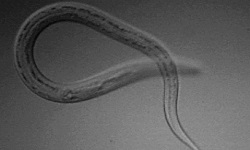
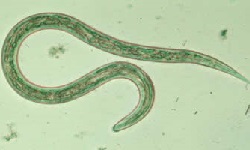
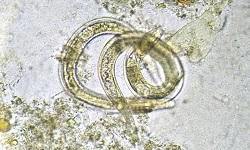
Wuchereria bancrofti - Periodicity, Treatment, Prevention, Control
Microfialrial periodicity of Wuchereria bancrofti
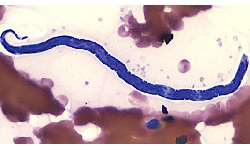
Wuchereria bancrofti shows marked periodicity in the circulation of microfilariae in the blood. The filarial nematode parasite shows three types of periodicity:
Nocturnal periodicity
Diurnal periodicity
Nocturnal sub-periodicity and diurnal sub-periodicity
Nocturnal periodicity
In Wuchereria bancrofti showing nocturnal periodicity, microfilariae are present in high numbers in the peripheral blood during a 4-hour period at midnight. These larvae are either absent or scanty in the host blood during the day.
Eg: nocturnal periodic Wuchereria bancrofti, Brugia malayi, and Brugia timori
Diurnal periodicity
In Wuchereria bancrofti showing diurnal periodicity, the microfilariae are present in greatest numbers in the peripheral blood during the daytime.
Eg: diurnal periodic Loa loa
Nocturnal sub-periodicity and diurnal sub-periodicity
If microfilaria is present in the peripheral blood continuously throughout the day and the night with a slight increase in numbers in the afternoon and evening, then the filarial nematode parasite is of nocturnal sub-periodicity and diurnal sub-periodicity.
It is also known as diurnal sub-periodic periodicity and is believed to have evolved to match the biting habits of the mosquito vectors.
Treatment of Wuchereria bancrofti
Drugs of choice for the treatment of Wuchereria bancrofti include:
DEC (diethylcarbamazine) for lymphatic filariasis
* kills mainly the microfilariae and to some extent the adult Wuchereria bancrofti but is not effective against third and fourth-stage larvae
* also reduces changes to developing chronic filariasis
* a second course can be repeated to kill adults
* side effects includes myalgia, headache, chill, arthralgia, fever
* side effect is due to massive killing of microfilaria
Ivermectin for onchocerciasis
levamisole
mebendazole
centprazine
Prevention, Control of Wuchereria bancrofti
The prevention and control of Wuchereria bancrofti infection are based on
successful treatment of infected individuals
reduction of transmission by controlling mosquito population especially around housing by eliminating breeding places, spraying oils and chemicals in breeding sites
using mosquito nets while sleeping, and netted windows in endemic areas
use of biological control agents such as bacteria (e.g. Bacillus sphaericus strain 1593, Bacillus thuringiensis serotype 11-14), fish (e.g. Poecilia reticulata molliensis)
wearing protective clothing
use of mosquito repellants
chemoprophylaxis
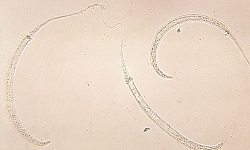
.jpg)