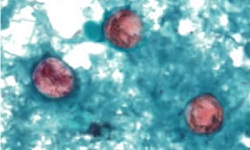
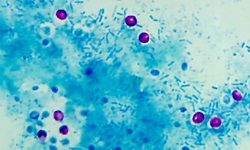
Balantidium coli - Laboratory Diagnosis, Epidemiology, Reservoir, Transmission, Treatment
Epidemiology of Balantidium coli
Since Balantidium coli usually occurs in pigs and humans are accidental hosts, infected people are mostly those who come in close contact with the pig. Areas where pig feces are used as fertilizers or where the water supply may be contaminated with pig excreta have more incidence of infection.
Epidemiological studies have confirmed that the Balantidium coli infection is worldwide. The endemic geographical areas/countries include South America, Central America, Indonesia, Pacific Islands, China, Papua New Guinea, etc.
Reservoir, Source of Balantidium coli
The reservoir for Balantidium coli is the pig. Infected pigs or human feces are the sources of infection while cysts are the infective stage of the parasite.
Transmission of Balantidium coli
Balantidium coli is transmitted by ingestion of food or water contaminated with fecal materials from pigs (pig to human) or from humans (human to human).
Laboratory Diagnosis of Balantidium coli
The laboratory diagnosis of Balantidium coli is done by the following process.
Sample
The samples collected for Balantidium coli include:
stool
ulcer tissue
pus from ulcer
Microscopy
The diagnosis of Balantidium coli cysts is mostly done by demonstration of cysts and in rare cases trophozoites in the samples.
Trophozoites can only be observed in fresh samples of diarrhea and dysenteric stools in acute cases.
Cysts can be seen in formed or semi-formed stools in chronic cases.
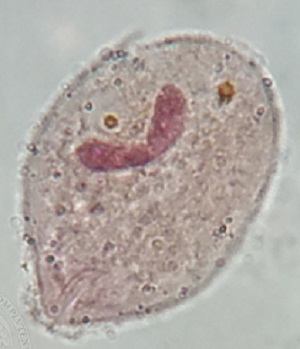
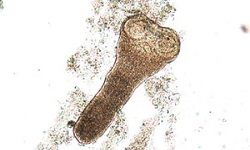
Image: Balantidium coli trophozoite (Source: Visavet)
Direct wet mount microscopy
the wet mount is prepared by mixing saline, iodine, or lactophenol cotton blue (LPCB)
Balantidium coli can be identified by their characteristic rapid revolving motility and presence of cilia around their funnel-shaped mouth
Smears
Biopsy specimens of the large intestine or pus and scrapings from the ulcer can be observed microscopically after smear preparation for Balantidium coli trophozoites.
Simple stains can be used to increase the sensitivity of the test.
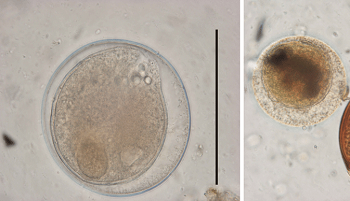
Image: Balantidium coli cyst - size 50μm; left - unstained cyst; right - Lugol's iodine-stained cyst (Source: ResearchGate)
Stool Culture
Balantidium coli can be cultured and isolated in Robinson’s medium and NIH polyxenic culture medium.
Treatment of Balantidium coli
Drugs of choice for Balantidium coli include:
Tetracycline
Metronidazole
Iodoquinol
Prevention, Control of Balantidium coli
Prevention, Control of Balantidium coli is done by following procedures:
improved personal hygiene such as proper washing of hands with soap after defecation and before eating food
treatment of water before drinking such as boiling, filtering the water used in a 0.22-micrometer membrane, iodination with tetracycline hydro per iodide
drinking bottled water while traveling to areas endemic to balantidiasis as chlorine treatment cannot kill the cysts
if salad is to be consumed, treat the vegetables with acetic acid or vinegar for 15 minutes
not performing sexual acts that involve fecal-oral contact
sanitary disposal of human and pig feces
treatment of infected pigs
not using pig feces as fertilizer
.png)