Cryptosporidium parvum - Clinical manifestation, Prognosis, Complications, Epidemiology, Reservoir, Transmission
Clinical manifestation of Cryptosporidium parvum
The clinical manifestation of Cryptosporidium parvum varies according to the immune status of the host. In children and immunocompetent individuals, self-limiting diarrhoea may occur while in patients with AIDS, severe prolonged life-threatening diarrhoea may occur.
Cryptosporidiosis in immunocompetent hosts
Cryptosporidium parvum in otherwise healthy people is in mild form and is rarely fatal
duration of the disease is relatively short- 1 week to 2 weeks
syndromes include watery diarrhoea, malaise, fever, nausea, flu-like illness, and abdominal pain
after the first or second day of infection, foul-smelling diarrhoea with 2 motions to 10 motions per day takes place
can be accompanied by weight loss of up to 10% and prostration
oocysts continue to be extracted in the faeces
Cryptosporidiosis in immunocompromised hosts
serious in people with conditions such as
AIDS
renal transplantation
severe malnutrition
IgA deficiency
congenital hypogammaglobulinaemia
severe combined immunodeficiency syndrome
cholera-like watery or mucus diarrhoea is more severe and chronic in patients with CD4 count less than <200/μl
diarrhoea with 70 stools per day and loss of body fluid of around 17 litres/day may occur
duration of diarrhoea may range from 1 week to 48 weeks which may lead to significant weight loss
other symptoms include low-grade fever (39° C), vomiting, nausea, crampy abdominal pain, malaise, myalgia, headache
entire gastrointestinal tract including the gall bladder, bile duct, pancreas, pharynx, and the bronchial tree may be infected by Cryptosporidium parvum
Complications of Cryptosporidium parvum
In immunocompromised individuals, complications of Cryptosporidium parvum include cholangiopathy and respiratory tract infections.
Prognosis of Cryptosporidium parvum
In immunocompromised patients, especially AIDS patients, with prolonged diarrhoea of more than 1 month and biliary disease, the prognosis is poor. Death occurs in more than 50% of patients due to dehydration caused by prolonged diarrhoea.
Epidemiology of Cryptosporidium parvum
Epidemiologically, Cryptosporidium parvum infection in immunocompetent hosts has been observed in 26 countries- 0.6% to 20% in western countries and 5-10% in Asia and Africa.
Reservoir, Source of Cryptosporidium parvum
Since as low as 10 to 100 oocysts can cause infection in humans, Cryptosporidium parvum is highly infectious.
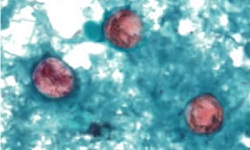
Man is the reservoir/source of Cryptosporidium parvum infection and human faeces containing thick-walled oocysts containing sporozoites are the infective forms. Other animals such as cattle and pets (cats, dogs) are another source of infection.
Cryptosporidium parvum oocysts are extremely resistant to chlorine used mostly to disinfect swimming pools and tap water in developing countries.
Transmission of Cryptosporidium parvum
Transmission of Cryptosporidium parvum infection from human to human occurs via the faecal-oral route. Animal-to-human transmission may also occur.
Human-to-human transmission
animal to human transmission
aerosols (less common)
sexual contact (less common)
accidental laboratory infection (less common)
.png)