Cyclospora cayetanensis - Classification, Morphology, Culture, Life Cycle, Clinical Manifestation
Introduction of Cyclospora cayetanensis
Cyclospora cayetanensis is the only species of the genus Cyclospora known to cause infection in humans called cyclosporiasis. The parasite, which is coccidian, causes infection of the gastrointestinal (GI) tract.
Classification of Cyclospora cayetanensis
Classification of Cyclospora cayetanensis is done by:
Domain: Eukaryota
(unranked): SAR
(unranked): Alveolata
Phylum: Apicomplexa
Class: Conoidasida
Subclass: Coccidiasina
Order: Eucoccidiorida
Suborder: Eimeriorina
Family: Eimeriidae
Genus: Cyclospora
Species: C. cayetanensis
History of Cyclospora cayetanensis
Historically, Cyclospora cayetanensis was first described in 1979 and was obtained from human faeces. It mostly causes infection in both immunocompetent as well as immunocompromised (HIV patients) hosts.
Habitat of Cyclospora cayetanensis
Cyclospora cayetanensis infects and inhabits the small intestine in man.
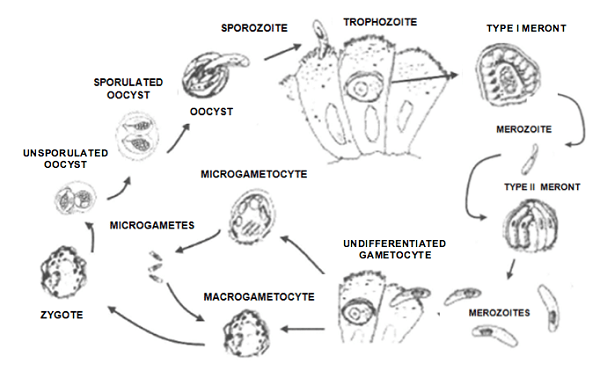
Figure: C. cayetanensis development stages (Source: ResearchGate)
Morphology of Cyclospora cayetanensis
The morphological forms of Cyclospora cayetanensis are described below.
Diagnostic form in humans
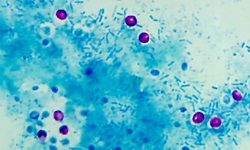
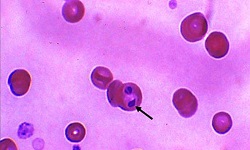
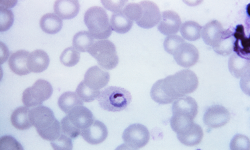
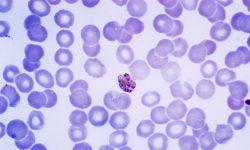
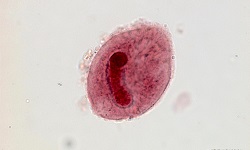
Oocysts
Cyclospora cayetanensis oocysts are excreted in human faeces
round to oval in shape
measures 8 μm to 10 μm in diameter
are variably acid-fast
under fluorescence microscopy, fluorescence blue-green is seen
Infective form
Sporulating oocyst
sporulating oocysts are infectious forms of Cyclospora cayetanensis in humans
each oocyst contains two sporocysts
each sporocyst measures 4μm in diameter
each sporocyst contains four sporozoites
Life Cycle of Cyclospora cayetanensis
humans get infected with Cyclospora cayetanensis after ingestion of water or food contaminated with sporulating oocysts
these oocysts after reaching the intestine release the sporozoites
the newly released sporozoites invade the enterocytes where they develop into unsporulated oocysts
the unsporulated oocysts are excreted in faeces
these oocysts undergo sporulation under favourable conditions in the environment- outside the host body
ingestion of the sporulated oocysts causes infection in susceptible hosts and the life cycle of Cyclospora cayetanensis is repeated
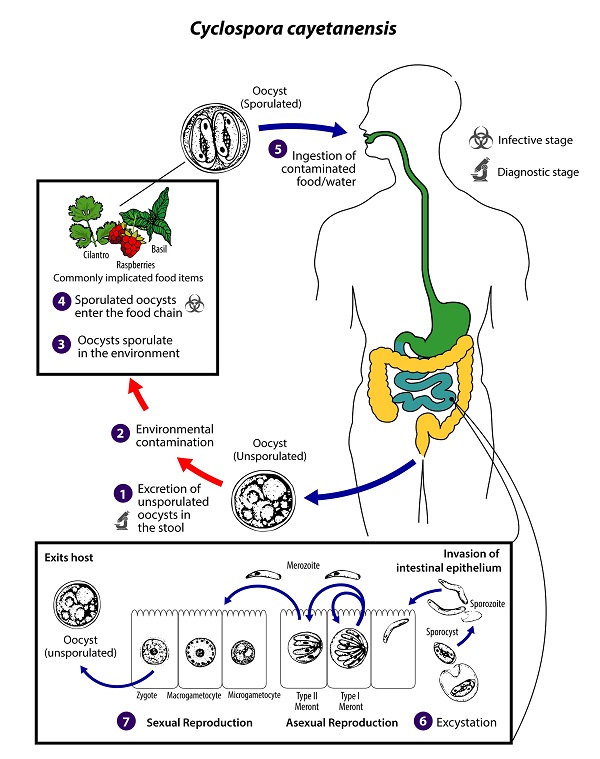
Figure: C. cayetanensis life cycle (Source: CDC)
Pathogenesis, Pathology of Cyclospora cayetanensis
The host small intestine shows pathological changes such as acute inflammation, chronic inflammation, blunting and atrophy of villi, hyperplasia of crypts, etc.
Clinical Manifestation of Cyclospora cayetanensis
clinical syndromes of Cyclospora cayetanensis are similar to that of isosporiasis and cryptosporidiosis
the incubation period ranges from 1 day to 14 days
other symptoms include abdominal pain, nausea, vomiting, malaise, low-grade fever, myalgias
in rare cases, clinical syndromes such as anorexia, bloating, flatulence, and fatigue are observed
the key clinical feature is diarrhoea and its course depends upon whether the host is immunocompromised or immunocompetent
in immunocompetent individuals, diarrhoea may last for several weeks to 2 weeks, self-limited, with a waxing and waning course
in an immunocompromised host, the onset of diarrhoea is insidious, watery, and profuse
in prolonged diarrhoea, dehydration, and loss of weight may occur, which might eventually lead to chronic diarrhoea with oocysts released in the faeces
Complications of Cyclospora cayetanensis
In patients with AIDS, Cyclospora cayetanensis infection is associated with the biliary disease with right upper quadrant pain.
Prognosis of Cyclospora cayetanensis
mortality by Cyclospora cayetanensis infection is rare and has a good prognosis
in immunocompromised hosts, morbidity occurs due to chronic diarrhoea
.png)