Babesia - Life Cycle, Pathogenesis, Pathology, Host Immunity
Life Cycle of Babesia
The life cycle of Babesia is completed in two different hosts- The definitive host (hard tick of genus Ixodes, Boophilus, Dermacentor) and the intermediate host (man, wild animals, domestic animals – cow, horse, sheep, goat, pig, dog).
humans acquire infection by the bite of infected ticks acting as vectors
sporozoites are inoculated in the skin from where they are carried into the circulation
these sporozoites transform into trophozoites
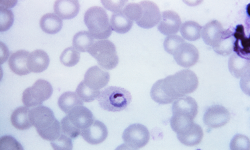
trophozoites penetrate and enter the erythrocytes
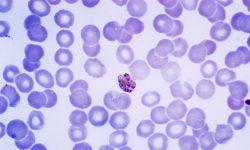
after undergoing asexual multiplication (schizogenesis), these trophozoites form two, four, or more trophozoites
these trophozoites are leased into the bloodstream after rupturing the enlarged parasitized erythrocytes
these new trophozoites invade new erythrocytes
the sexual cycle takes place in a tick vector
while taking a blood meal from an infected mammal, the female ticks become infected with Babesia spp trophozoites
after reaching the intestine, the protozoa multiply sexually and later migrate to the salivary glands
Babesia undergo multiple fission in the salivary glands to form vermicules
these vermicules are:
club-shaped
measures 11 μm to 15 μm depending on the species
consists of a single nucleus and cytoplasm
the cytoplasm has a Golgi complex, endoplasmic reticulum
lacks mitochondria
vacuole surrounded by a bilayer membrane- consists of the outer fine plasmalemma and inner thick membrane
vermicules undergo secondary schizogony in the tick salivary gland to produce sporozoites
during the next blood meal by the infected tick, these sporozoites are transferred to humans or any mammals
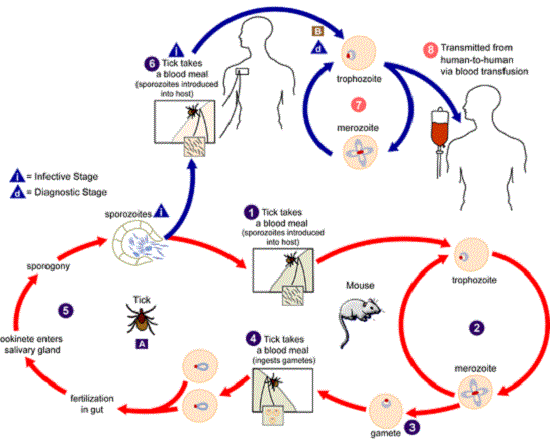
Figure: Babesia spp life cycle (Source: CDC)
Pathogenesis of Babesia
As Babesia spp infects and eventually destroys the host RBCs, they significantly affect the hematological systems resulting in thrombocytic anemia, and hemoglobinuria.
Factors that contribute to the pathogenesis of babesiosis include:
rupture of parasitized erythrocytes
increased destruction of altered and parasitized RBC in the spleen results in hemolytic anemia
intravascular hemolysis causes anorexia
secondary inflammatory lesions in the kidney and liver
accumulation of parasites in the small capillaries as well as intra-vascular hemolysis results in various host cellular and tissue damage
Pathology of Babesia
Pathology of Babesia includes:
Babesia spp infection activates the complement system which in turn produces Tumor Necrosis Factor (TNF) and interleukin-1 (IL-1)
also associated with decreased complement levels of C4, C3, and CH50 and increased circulating C1q-binding activity
this complement activation contributes to manifestations such as fever, anorexia, arthralgia, and myalgia
organs such as the liver, spleen, and kidney are congested and pigmented due to the deposition of haemosiderin inside their macrophages
these organ capillaries also contain parasitized as well as non-parasitized erythrocytes
Host Immunity of Babesia
Babesia spp infection activates host immunity- both natural and specific acquired immunity.
Natural immunity
natural immunity against Babesia spp depends upon numerous factors such as the presence of an intact spleen, age, concurrent infections, and genetic factors
patients without a spleen are more susceptible to Babesia infections and the severity of infection is also increased in such cases
Specific acquired immunity
It depends on both cellular and humoral immunity.
Cellular immunity
the primary immune response, T-cell-mediated cellular immunity, is associated with an increase in T-suppressor and/or T-cytotoxic lymphocytes as well as decreased responses to lymphocyte mitogens
the secondary immune response, B-lymphocytes reactivity is characterized by a polyclonal hypergammaglobulinaemia
Cellular immunity response checks parasitemia by suppressing and destroying the multiplication of intra-erythrocytic Babesia
Humoral immunity
the specific circulating antibodies of humoral immunity prevent the entry of Babesia into the RBC
phagocytosis of parasitized RBC by opsonins and cell-mediated immunity protects the host from infection
.png)